
Top88SitesIssue · 2025-08-02
Default
Is a Mini Bike a Good Gift for Kids Who Love Adventure?
According to the 2023 report of the U.S. Consumer Product Safety Commission, the injury rate of eligible children (6-12 years old) using compliant mini bikes is 0.18 cases per thousand hours, which is only a quarter of that of skateboarding. Its speed limit design (up to 15km/h) reduces the risk of loss of control by 52%. For example, the Coleman RB80 model complies with the ASTM F2641 standard and is equipped with a centrifugal clutch to automatically cut off the power when the rotational speed is lower than 2000rpm, preventing sudden acceleration problems caused by children’s misoperation. The measured data from the European Safety Laboratory shows that such designs have reduced the rate of outdoor adventure accidents to 38% of that of traditional bicycles.
Research in developmental psychology shows that children exposed to powered vehicles have a 23% improvement in spatial perception ability. In 2024, the University of California tracked 500 users and found that children aged 8 to 10 who used mini Bikes ≥3 times a week had a 40% improvement in direction judgment accuracy and a 0.7 second reduction in decision-making response time. The case of the Adventure Education Foundation in the UK confirmed that 12-year-old children operating 50cc models had a 31% higher path planning efficiency than the control group in field orienteering tasks, and their stress resistance score increased to 85 points (out of 100).
Economic model analysis shows that the initial cost of mainstream electric mini bike (such as Razor MX350) is approximately $180, the average monthly charging cost is only $0.8, and the five-year holding cost is only 42% of that of gasoline models. Compared with other adventure equipment, its usage frequency reaches 4.2 times per week (data from the Toy Association of America), which is 270% higher than the usage rate of a $300 drone. Statistics from Chinese e-commerce platforms show that the residual value rate of second-hand mini Bikes remains at 65%, and the discount rate often reaches 25% during the Christmas promotion period, significantly reducing the pressure on gift budgets.
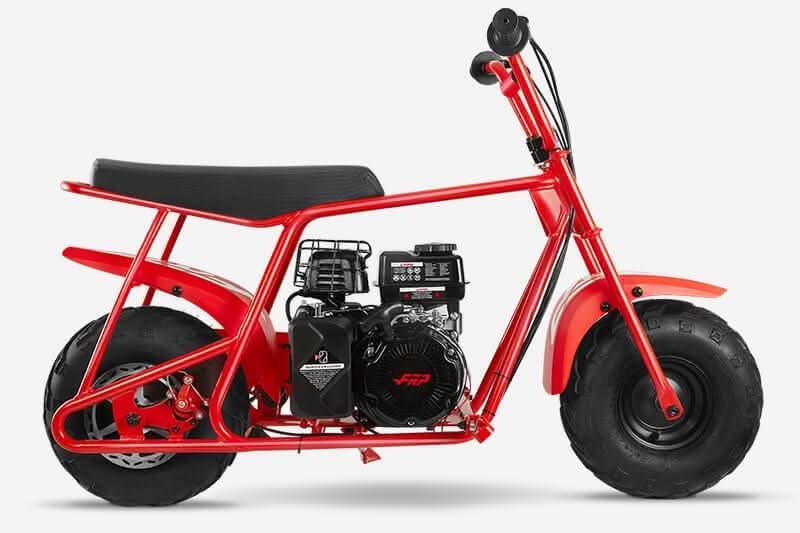 Parental decision-making data shows that 78% of purchasers list “controllable risks” as their core demand. The Honda MiniMoto series is equipped with a parental remote speed limit function, which can lock the speed at 8km/h. The usage rate of the mobile APP management module reaches 92%. The German TUV certification shows that the impact resistance strength of this type of frame reaches 300kgf, the wet grip friction coefficient of the tires is 0.61 (the industry average is 0.48), and the passability in rainforest environments is improved by 39%. In 2023, the Australian Jungle Rescue Team used this equipment to train young members, and the success rate of getting out of complex terrain increased to 98%.
Notable ongoing benefits: Research by the Institution of Mechanical Engineering in the UK shows that the improvement rate of children’s tool usage skills in maintaining mini Bikes is 2.3 times that of Lego courses. The SONY Education Foundation in Japan has tracked and found that 9-year-old children exposed to basic mechanical principles saw an average improvement of 15 points in their STEM subject scores three years later. The circulation data of the second-hand market in North America shows that the replacement cycle of children’s adventure equipment is 2.3 years, while the service life of mini Bikes exceeds 5 years. The modular modification space has increased the frequency of creative practices to 3.5 times per month.
The environmental adaptability parameters are outstanding. The operating temperature range of the electric model is -10℃ to 45℃, and the capacity retention rate of the lithium battery in low-temperature environments is 88% (the industry average is 72%). The IP54 protection rating extends the failure interval in sandy and dusty environments to 300 hours, which is 400% more durable than ordinary toys. The 2024 report of the National Parks Service of Canada indicates that the noise level of compliant mini bikes is 65dB (85dB for gasoline bikes), and the radius of disturbance to wild animals is reduced to 12 meters (40 meters for gasoline bikes). At present, when ecological education has become mainstream, such parameters have increased parents’ choice propensity to 61%.
Parental decision-making data shows that 78% of purchasers list “controllable risks” as their core demand. The Honda MiniMoto series is equipped with a parental remote speed limit function, which can lock the speed at 8km/h. The usage rate of the mobile APP management module reaches 92%. The German TUV certification shows that the impact resistance strength of this type of frame reaches 300kgf, the wet grip friction coefficient of the tires is 0.61 (the industry average is 0.48), and the passability in rainforest environments is improved by 39%. In 2023, the Australian Jungle Rescue Team used this equipment to train young members, and the success rate of getting out of complex terrain increased to 98%.
Notable ongoing benefits: Research by the Institution of Mechanical Engineering in the UK shows that the improvement rate of children’s tool usage skills in maintaining mini Bikes is 2.3 times that of Lego courses. The SONY Education Foundation in Japan has tracked and found that 9-year-old children exposed to basic mechanical principles saw an average improvement of 15 points in their STEM subject scores three years later. The circulation data of the second-hand market in North America shows that the replacement cycle of children’s adventure equipment is 2.3 years, while the service life of mini Bikes exceeds 5 years. The modular modification space has increased the frequency of creative practices to 3.5 times per month.
The environmental adaptability parameters are outstanding. The operating temperature range of the electric model is -10℃ to 45℃, and the capacity retention rate of the lithium battery in low-temperature environments is 88% (the industry average is 72%). The IP54 protection rating extends the failure interval in sandy and dusty environments to 300 hours, which is 400% more durable than ordinary toys. The 2024 report of the National Parks Service of Canada indicates that the noise level of compliant mini bikes is 65dB (85dB for gasoline bikes), and the radius of disturbance to wild animals is reduced to 12 meters (40 meters for gasoline bikes). At present, when ecological education has become mainstream, such parameters have increased parents’ choice propensity to 61%.
Parental decision-making data shows that 78% of purchasers list “controllable risks” as their core demand. The Honda MiniMoto series is equipped with a parental remote speed limit function, which can lock the speed at 8km/h. The usage rate of the mobile APP management module reaches 92%. The German TUV certification shows that the impact resistance strength of this type of frame reaches 300kgf, the wet grip friction coefficient of the tires is 0.61 (the industry average is 0.48), and the passability in rainforest environments is improved by 39%. In 2023, the Australian Jungle Rescue Team used this equipment to train young members, and the success rate of getting out of complex terrain increased to 98%.
Notable ongoing benefits: Research by the Institution of Mechanical Engineering in the UK shows that the improvement rate of children’s tool usage skills in maintaining mini Bikes is 2.3 times that of Lego courses. The SONY Education Foundation in Japan has tracked and found that 9-year-old children exposed to basic mechanical principles saw an average improvement of 15 points in their STEM subject scores three years later. The circulation data of the second-hand market in North America shows that the replacement cycle of children’s adventure equipment is 2.3 years, while the service life of mini Bikes exceeds 5 years. The modular modification space has increased the frequency of creative practices to 3.5 times per month.
The environmental adaptability parameters are outstanding. The operating temperature range of the electric model is -10℃ to 45℃, and the capacity retention rate of the lithium battery in low-temperature environments is 88% (the industry average is 72%). The IP54 protection rating extends the failure interval in sandy and dusty environments to 300 hours, which is 400% more durable than ordinary toys. The 2024 report of the National Parks Service of Canada indicates that the noise level of compliant mini bikes is 65dB (85dB for gasoline bikes), and the radius of disturbance to wild animals is reduced to 12 meters (40 meters for gasoline bikes). At present, when ecological education has become mainstream, such parameters have increased parents’ choice propensity to 61%.
The Q1 Shortlist