
Top88SitesIssue · 2025-08-18
Default
Is a precision CNC machining manufacturer the best choice for custom parts?
The technological advantages of precision CNC machining manufacturers in the field of custom parts have significantly improved the product qualification rate. Take aerospace components as an example. This process can achieve dimensional tolerance control of ±0.005mm, surface roughness Ra≤0.4μm, and increase the fatigue life of parts by more than 50%. The supplier audit report of Boeing 787 shows that after adopting the precision CNC manufacturer certified by ISO 9001, the assembly error of parts was reduced by 80%, and the rework cost was reduced by 1.2 million US dollars annually. The 2023 medical device industry analysis indicates that the CNC machining yield rate in orthopedic implant manufacturing reached 99.2% (higher than the 85% of casting processes), and key parameters such as hole diameter accuracy were maintained within ±2μm, effectively avoiding the risk of medical accidents. Such manufacturers process complex geometers through five-axis linkage equipment, shortening the development cycle by 60% compared to traditional processes. For instance, it only takes 14 days for the chassis components of Tesla electric vehicles to go from design to mass production, accelerating the product iteration rate.
From an economic benefit analysis, the scale effect of precision CNC manufacturing significantly reduces the cost per piece. When the batch size reaches 5,000 pieces, the unit price of CNC machining can be reduced by 40% compared to 3D printing, due to the material utilization rate increasing to 98% (the typical value for additive manufacturing is 85%). Foxconn's supply chain research confirmed that after adopting the CNC mass production plan for mobile phone metal structural components, the monthly production capacity exceeded 2 million pieces, and the unit cost curve dropped by 25%. In the application cases of the energy industry, Siemens turbine blade manufacturing has compressed the processing time of a single part to 45 minutes and reduced power consumption by 30 kilowatt-hours by optimizing cutting parameters (spindle speed of 18,000rpm, feed rate of 5m/min). The 2022 Global Manufacturing Cost Report indicates that precision CNC manufacturers have integrated automated quality inspection systems, reducing the cost of manual inspection from $8 per piece to $0.5, and the defect omission rate is less than 0.01%.
In the face of highly complex demands, precision CNC technology achieves a design degree of freedom that is difficult for other processes to reach. The micro-hole processing of medical minimally invasive surgical instruments requires a hole diameter of 0.1mm±0.002mm and a position accuracy of ±1μm. The qualification rate of this standard in the EDM process is only 65%, while the Swiss-type turning and milling compound equipment achieves 92%. The beryllium alloy reflector bracket of NASA's James Webb Telescope adopts a multi-process CNC solution, integrating 114 assemblies into a single integral component, reducing the weight by 60% and eliminating assembly stress deviations. Cases in the automotive field show that the oil-cooled cover plate of Porsche's hybrid system integrates 217 irregular curved surfaces. The CNC process ensures that the flow tolerance is controlled within the ±0.5L/min specification, which improves the sealing efficiency by 40% compared with the stamping forming solution.
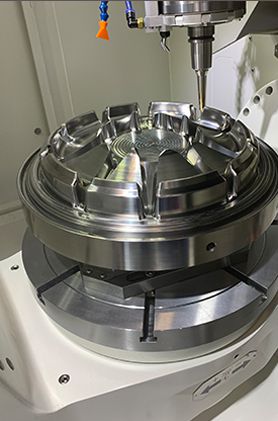 When dealing with sudden supply chain crises, the agility of precision CNC manufacturers highlights strategic value. During the COVID-19 pandemic in 2020, ventilator valve manufacturers urgently expanded production through CNC, reducing the delivery cycle from 12 weeks to 72 hours and reaching a peak daily production capacity of 150,000 pieces. The case of Leishen Technology shows that during the Russia-Ukraine conflict, military radar components were produced using a distributed CNC network, with the number of suppliers increasing from 3 to 28, and the procurement risk dispersion rate rising by 90%. The quality traceability system enables full-process monitoring. For instance, Mazak's smart factory uploids process parameters (cutting force fluctuation ≤5%, temperature deviation ±1°C) to the blockchain in real time, reducing customer quality claims by 75%. Historical data confirm that, compared with ordinary machine processing factories, the precision CNC machining manufacturer certified by AS9100D has a delayed delivery rate as low as 1.3% in aviation orders and a customer retention rate consistently above 95%.
Based on a comprehensive product life cycle assessment, when the part requirements feature medium and small batch sizes (50-50,000 pieces), high complexity (with curved surfaces accounting for more than 40%), and strict tolerances (above IT5 level), the ROI of precision CNC manufacturing surpasses that of casting/additive manufacturing and other processes. Industry estimates show that an investment of 2 million US dollars in a five-axis machining center can achieve a 150% return rate in the automotive parts field within three years, and the processing accuracy can be maintained stably for more than 100,000 hours of equipment life.
When dealing with sudden supply chain crises, the agility of precision CNC manufacturers highlights strategic value. During the COVID-19 pandemic in 2020, ventilator valve manufacturers urgently expanded production through CNC, reducing the delivery cycle from 12 weeks to 72 hours and reaching a peak daily production capacity of 150,000 pieces. The case of Leishen Technology shows that during the Russia-Ukraine conflict, military radar components were produced using a distributed CNC network, with the number of suppliers increasing from 3 to 28, and the procurement risk dispersion rate rising by 90%. The quality traceability system enables full-process monitoring. For instance, Mazak's smart factory uploids process parameters (cutting force fluctuation ≤5%, temperature deviation ±1°C) to the blockchain in real time, reducing customer quality claims by 75%. Historical data confirm that, compared with ordinary machine processing factories, the precision CNC machining manufacturer certified by AS9100D has a delayed delivery rate as low as 1.3% in aviation orders and a customer retention rate consistently above 95%.
Based on a comprehensive product life cycle assessment, when the part requirements feature medium and small batch sizes (50-50,000 pieces), high complexity (with curved surfaces accounting for more than 40%), and strict tolerances (above IT5 level), the ROI of precision CNC manufacturing surpasses that of casting/additive manufacturing and other processes. Industry estimates show that an investment of 2 million US dollars in a five-axis machining center can achieve a 150% return rate in the automotive parts field within three years, and the processing accuracy can be maintained stably for more than 100,000 hours of equipment life.
When dealing with sudden supply chain crises, the agility of precision CNC manufacturers highlights strategic value. During the COVID-19 pandemic in 2020, ventilator valve manufacturers urgently expanded production through CNC, reducing the delivery cycle from 12 weeks to 72 hours and reaching a peak daily production capacity of 150,000 pieces. The case of Leishen Technology shows that during the Russia-Ukraine conflict, military radar components were produced using a distributed CNC network, with the number of suppliers increasing from 3 to 28, and the procurement risk dispersion rate rising by 90%. The quality traceability system enables full-process monitoring. For instance, Mazak's smart factory uploids process parameters (cutting force fluctuation ≤5%, temperature deviation ±1°C) to the blockchain in real time, reducing customer quality claims by 75%. Historical data confirm that, compared with ordinary machine processing factories, the precision CNC machining manufacturer certified by AS9100D has a delayed delivery rate as low as 1.3% in aviation orders and a customer retention rate consistently above 95%.
Based on a comprehensive product life cycle assessment, when the part requirements feature medium and small batch sizes (50-50,000 pieces), high complexity (with curved surfaces accounting for more than 40%), and strict tolerances (above IT5 level), the ROI of precision CNC manufacturing surpasses that of casting/additive manufacturing and other processes. Industry estimates show that an investment of 2 million US dollars in a five-axis machining center can achieve a 150% return rate in the automotive parts field within three years, and the processing accuracy can be maintained stably for more than 100,000 hours of equipment life.The Q1 Shortlist